

How to Choose a Mobile Robot Chassis: A Practical Guide for AMR, AGV and ROS Projects

Choosing the right mobile robot chassis is one of the most important decisions in an autonomous robot project. The chassis determines how much equipment the robot can carry, where it can operate, how accurately it can move and how easily it can integrate with navigation systems, sensors and upper-level applications.
Whether you are developing an autonomous mobile robot, an AGV, an inspection robot or a ROS research platform, selecting a chassis based only on its appearance or rated payload can lead to poor mobility, insufficient runtime and difficult system integration.
This guide explains the key factors you should evaluate before choosing a mobile robot chassis.
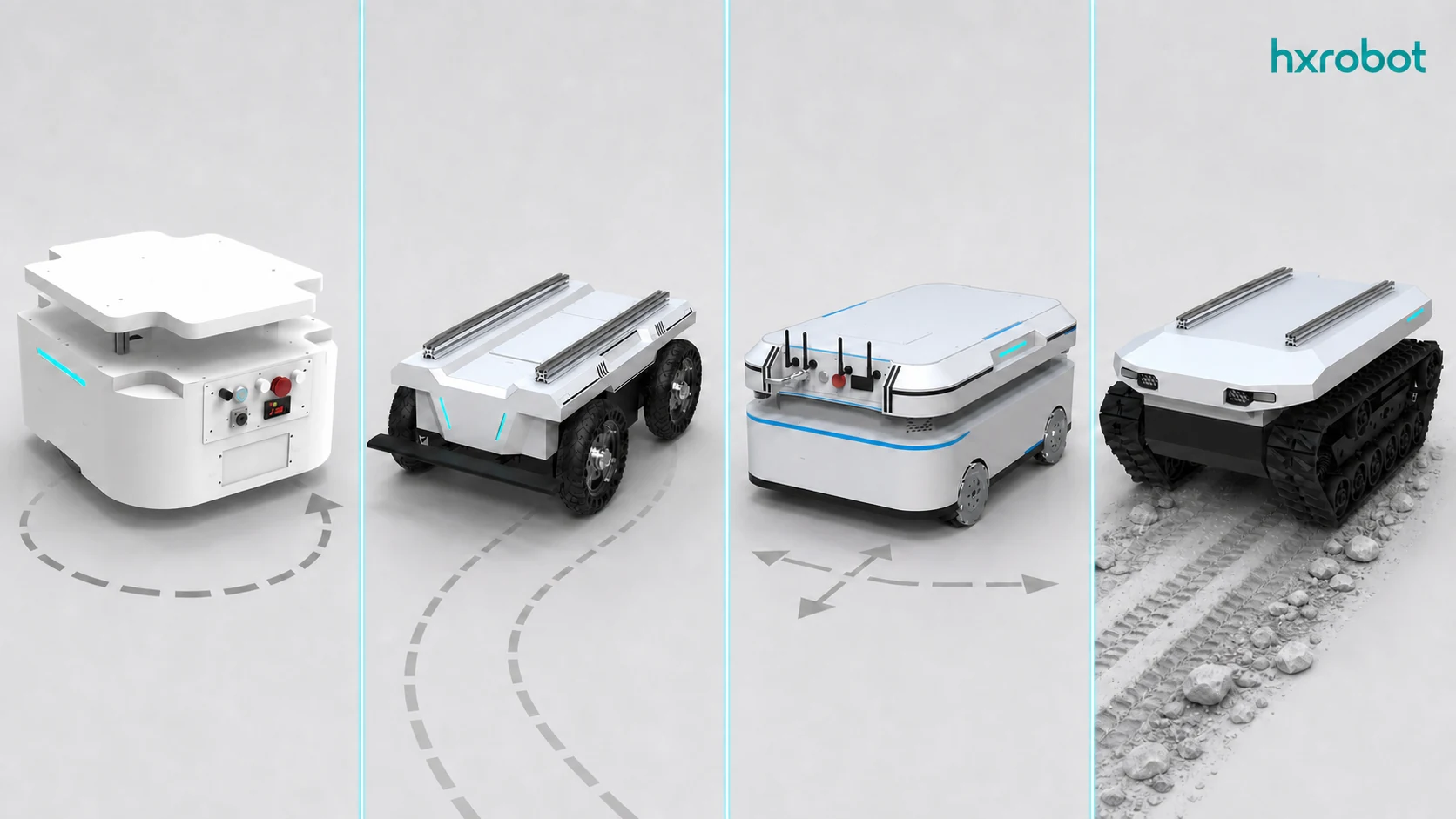
Comparison of differential-drive, four-wheel, omnidirectional and tracked mobile robot chassis.
1. Define the Robot’s Application
Begin by identifying the work the robot needs to perform. Different applications have very different chassis requirements.
Common mobile robot applications include:
- Warehouse transportation
- Factory material handling
- Indoor and outdoor inspection
- Autonomous delivery
- Mapping and surveying
- Agricultural transportation
- Security and patrol
- Robotics education and research
- Robot-arm integration
- Custom OEM robot development
For example, an indoor warehouse robot normally requires smooth movement, accurate stopping and a compact turning radius. An outdoor inspection robot may need larger wheels, greater ground clearance, stronger suspension and protection against dust or water.
Before selecting a chassis, write down the robot’s tasks, working environment and expected operating conditions.
2. Calculate the Required Payload
Payload is more than the weight of the object being transported. It should include every component installed on the mobile platform.
The total payload may include:
- LiDAR
- Cameras
- RTK and GNSS equipment
- Industrial computer
- Control cabinet
- Robotic arm
- Lifting mechanism
- Inspection equipment
- Protective enclosure
- Transported materials
It is advisable to leave a reasonable safety margin instead of operating continuously at the maximum rated load. The position of the payload is also important. A tall or unevenly distributed load can change the robot’s center of gravity and reduce stability during acceleration, braking and turning.
When contacting a chassis supplier, provide both the total equipment weight and the approximate installation dimensions.
3. Select the Appropriate Drive Type
The drive system affects mobility, turning radius, control complexity and terrain adaptability.
Differential Drive
A differential-drive robot normally uses independently controlled wheels on the left and right sides. It turns by changing the speed or direction of the wheels.
Its main advantages include:
- Simple mechanical structure
- Flexible turning
- Zero-radius rotation
- Mature motion-control technology
- Good compatibility with ROS navigation
Differential drive is commonly used for indoor transportation, inspection, research and service robots.
Ackermann Steering
Ackermann steering works in a similar way to a conventional vehicle. The front wheels steer while the vehicle moves along a curved path.
Its advantages include:
- Stable movement at higher speeds
- Natural steering behavior
- Good performance over longer outdoor routes
- Reduced tire wear compared with skid steering
It is often selected for outdoor unmanned vehicles, agricultural robots and larger mobile platforms. However, it requires more space to turn and usually cannot rotate in place.
Mecanum Wheel Drive
Mecanum wheels allow the robot to move forward, backward, sideways and diagonally.
They are useful when:
- The operating space is narrow
- Sideways positioning is required
- The robot needs to align precisely with equipment
- Omnidirectional movement is more important than terrain performance
Mecanum wheel platforms are most suitable for flat and relatively clean indoor floors. Uneven ground can reduce movement accuracy and stability.
Tracked Drive
Tracked chassis distribute the robot’s weight over a larger contact area and provide strong traction.
They are suitable for:
- Muddy or loose ground
- Grass and agricultural environments
- Uneven outdoor terrain
- Slopes and obstacles
- Inspection in challenging environments
Compared with wheeled platforms, tracked robots may consume more energy and experience greater friction while turning.
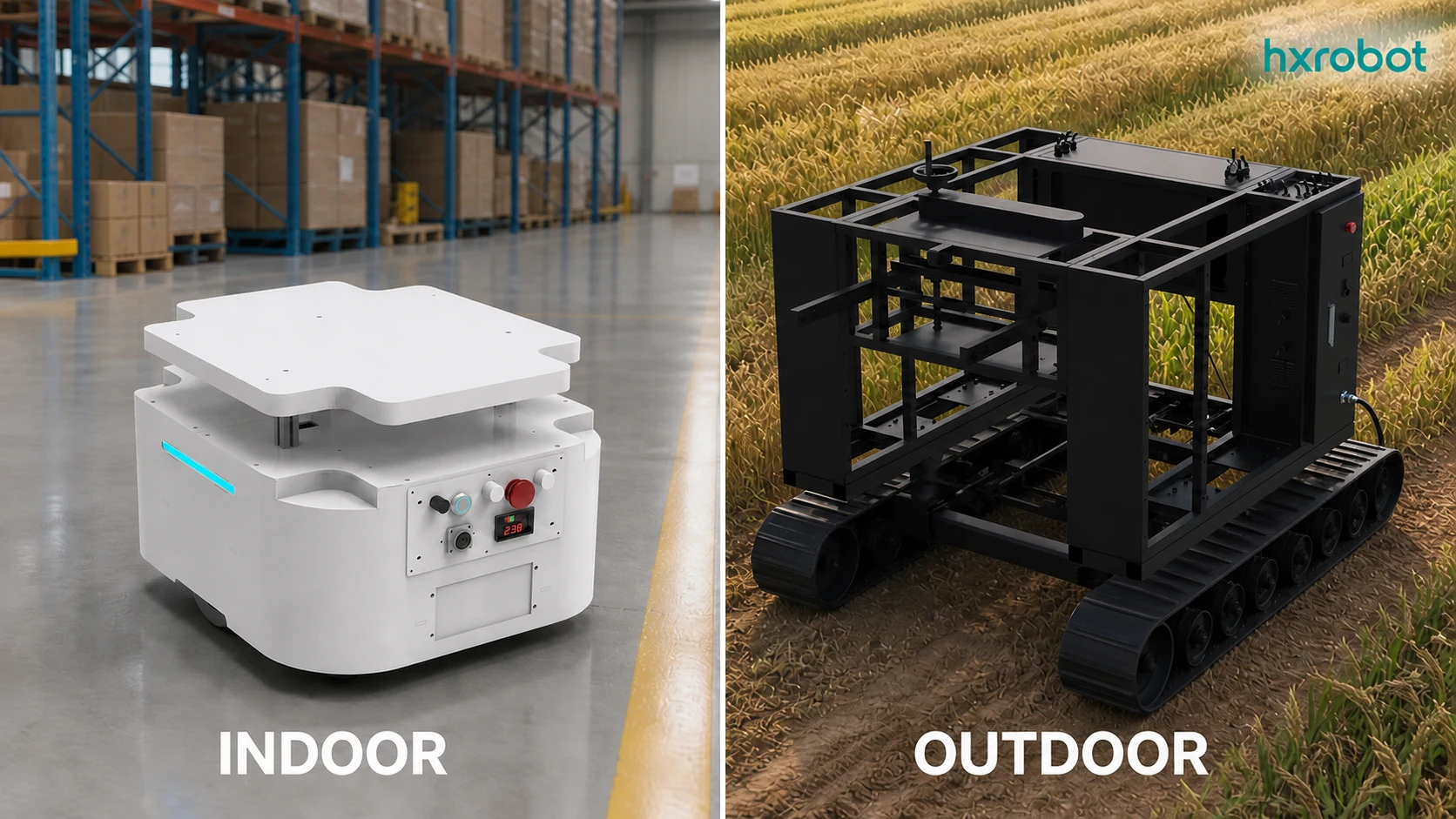
Different mobile robot chassis are designed for indoor warehouse floors and outdoor rough-terrain environments.
4. Evaluate the Operating Environment
The same chassis may perform well indoors but poorly outdoors. Consider the following environmental conditions:
- Indoor or outdoor operation
- Smooth floor, gravel, grass or mud
- Maximum slope
- Height of obstacles and thresholds
- Required ground clearance
- Narrowest passage
- Minimum turning space
- Ambient temperature
- Dust, rain or water exposure
- Vibration and impact
For outdoor applications, wheel diameter, tire type, suspension and ground clearance are especially important. If the robot will operate in dusty or wet environments, confirm the protection level of the motors, controllers, connectors and electrical enclosure.
For indoor applications, also consider floor joints, elevator thresholds and the space required for turning or docking.
5. Confirm the Required Speed and Motion Accuracy
A higher maximum speed is not always better. The appropriate speed depends on the payload, work area and safety requirements.
A robot carrying delicate instruments or operating around people may require smooth acceleration and lower speed. A surveying or patrol vehicle operating over a large outdoor area may require a higher travel speed.
Important motion parameters include:
- Maximum speed
- Minimum stable speed
- Acceleration and deceleration
- Braking distance
- Turning radius
- Stopping accuracy
- Repeat positioning accuracy
Remember that navigation accuracy and mechanical stopping accuracy are related but not identical. Accurate LiDAR or RTK positioning cannot fully compensate for wheel slip, mechanical clearance or unsuitable tires.
6. Choose the Navigation Method
The navigation solution should match the operating environment.
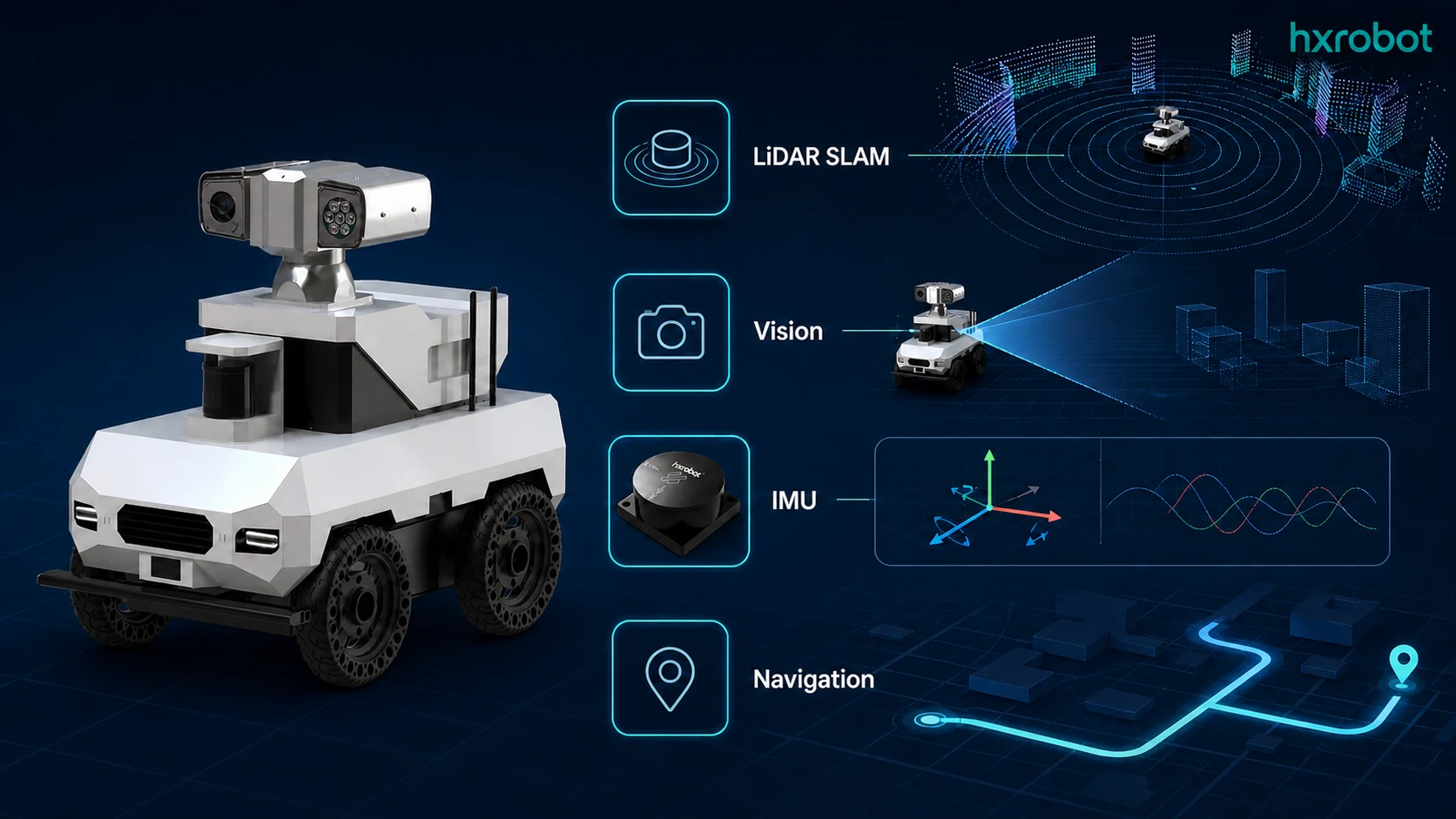
LiDAR SLAM
LiDAR-based SLAM is widely used for indoor mobile robots. It allows the robot to create a map, estimate its position and navigate between target points without installing magnetic strips.
It is suitable for factories, warehouses, laboratories and other structured environments.
Visual Navigation
Cameras can support object recognition, visual positioning and obstacle detection. Visual navigation may be used independently or combined with LiDAR, IMU and wheel encoders.
Lighting conditions and environmental changes should be considered when relying heavily on cameras.
RTK and INS Navigation
RTK provides high-precision positioning for outdoor robots when satellite signals and correction data are available. An inertial navigation system can improve stability when the positioning signal is temporarily weak.
RTK/INS navigation is commonly used for:
- Outdoor mapping
- Agricultural robots
- Patrol vehicles
- Unmanned transport platforms
- Robots operating along predefined outdoor routes
7. Check Sensors and Safety Features
A mobile robot should detect obstacles and respond safely to people, equipment and unexpected objects.
Depending on the application, the chassis may need to support:
- Safety LiDAR
- Ultrasonic sensors
- Depth cameras
- Collision sensors
- Emergency stop buttons
- Warning lights
- Buzzers
- Wheel encoders
- IMU
- Anti-drop sensors
The safety design should be based on the robot’s speed, weight, payload and operating environment. A heavy industrial platform generally requires a more comprehensive safety system than a small research robot.
8. Review Communication Interfaces
Communication interfaces determine how easily the chassis can connect with sensors, computers and upper-level control systems.
Common interfaces and protocols include:
- CAN
- RS232
- RS485
- Ethernet
- USB
- Modbus
- Wi-Fi
- Remote-control interfaces
Before purchasing, confirm whether the supplier provides:
- Communication protocol documentation
- Command examples
- Software development kit
- ROS or ROS 2 support
- Electrical interface definitions
- Wiring diagrams
- Sample programs
- Technical support during integration
An open and well-documented control interface can significantly reduce development time.
9. Estimate Battery Capacity and Runtime
Battery selection should be based on actual power consumption rather than chassis runtime alone.
The robot’s total energy consumption includes:
- Drive motors
- Industrial computer
- LiDAR and cameras
- Communication equipment
- Robotic arm
- Lifting mechanism
- Lighting and other accessories
Ask whether the stated runtime includes only the unloaded chassis or the complete robot system under normal operating conditions.
Other factors to consider include:
- Battery chemistry
- Charging time
- Replaceable battery options
- Automatic charging
- Battery-management system
- Charger input standard
- Shipping requirements for batteries
For robots expected to operate continuously, automatic charging or fast battery replacement may be more important than maximum battery capacity.
10. Consider Mechanical and Electrical Integration
Confirm that the chassis provides enough space and mounting points for your equipment.
Review:
- Platform dimensions
- Mounting-hole positions
- Internal installation space
- Cable-routing space
- Power-output options
- Maximum available current
- Sensor mounting positions
- Center-of-gravity limitations
- Maintenance accessibility
Providing the supplier with a basic equipment layout or 3D model can help identify integration problems before production.
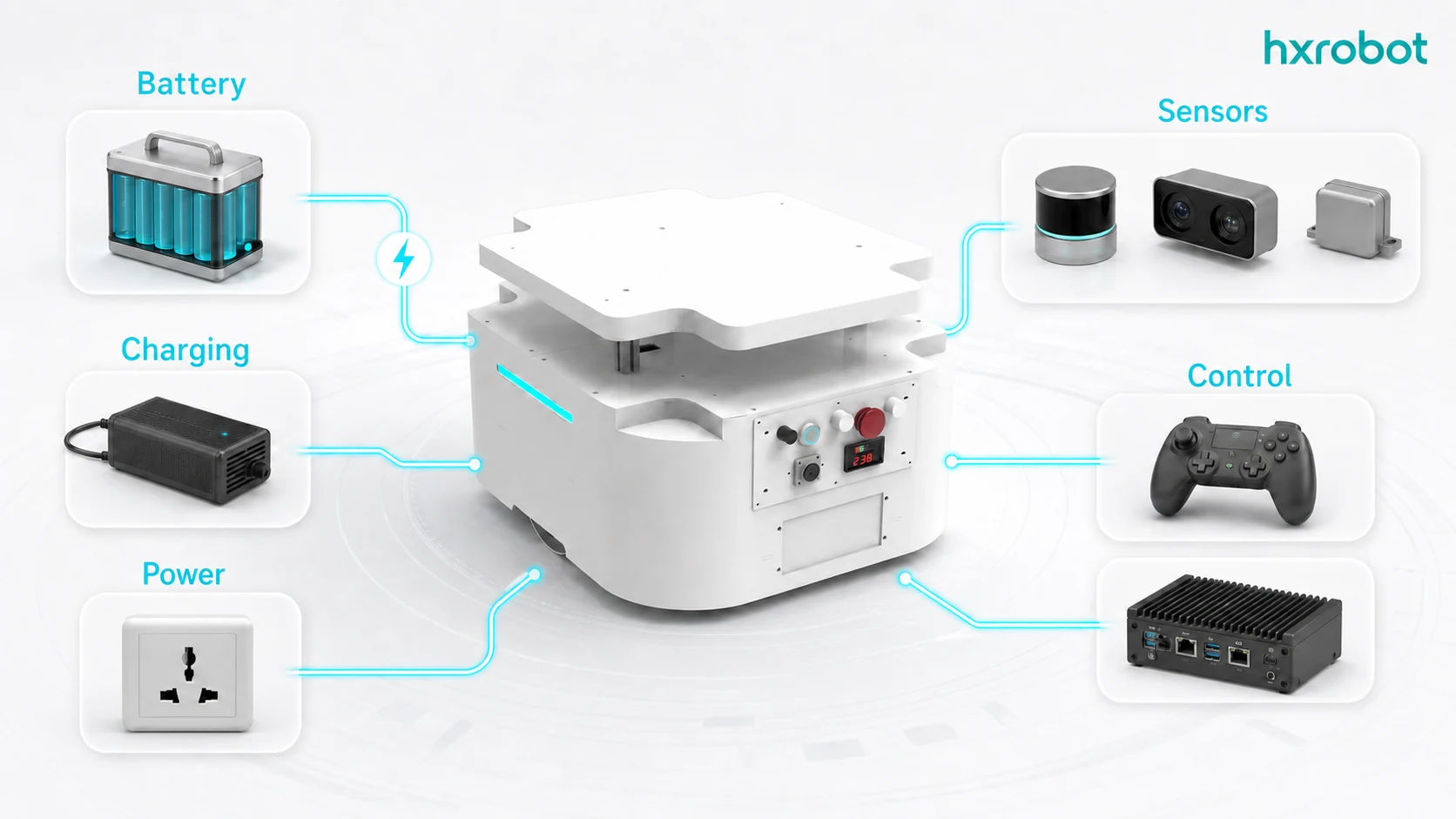
11. Standard Chassis or Customized Platform?
A standard mobile robot chassis is usually the best choice when its payload, dimensions, drive type and interfaces already meet the project requirements. It can reduce development cost and shorten delivery time.
Customization may be necessary when the project requires:
- Special platform dimensions
- Higher payload
- Unique wheel or track configuration
- Specific ground clearance
- A lifting or conveyor mechanism
- Robotic-arm integration
- Special communication interfaces
- Outdoor protection
- Custom batteries
- Modified control software
- A branded enclosure
For customized projects, provide a clear requirement document covering the application, payload, environment, navigation method, dimensions, runtime and expected quantity.
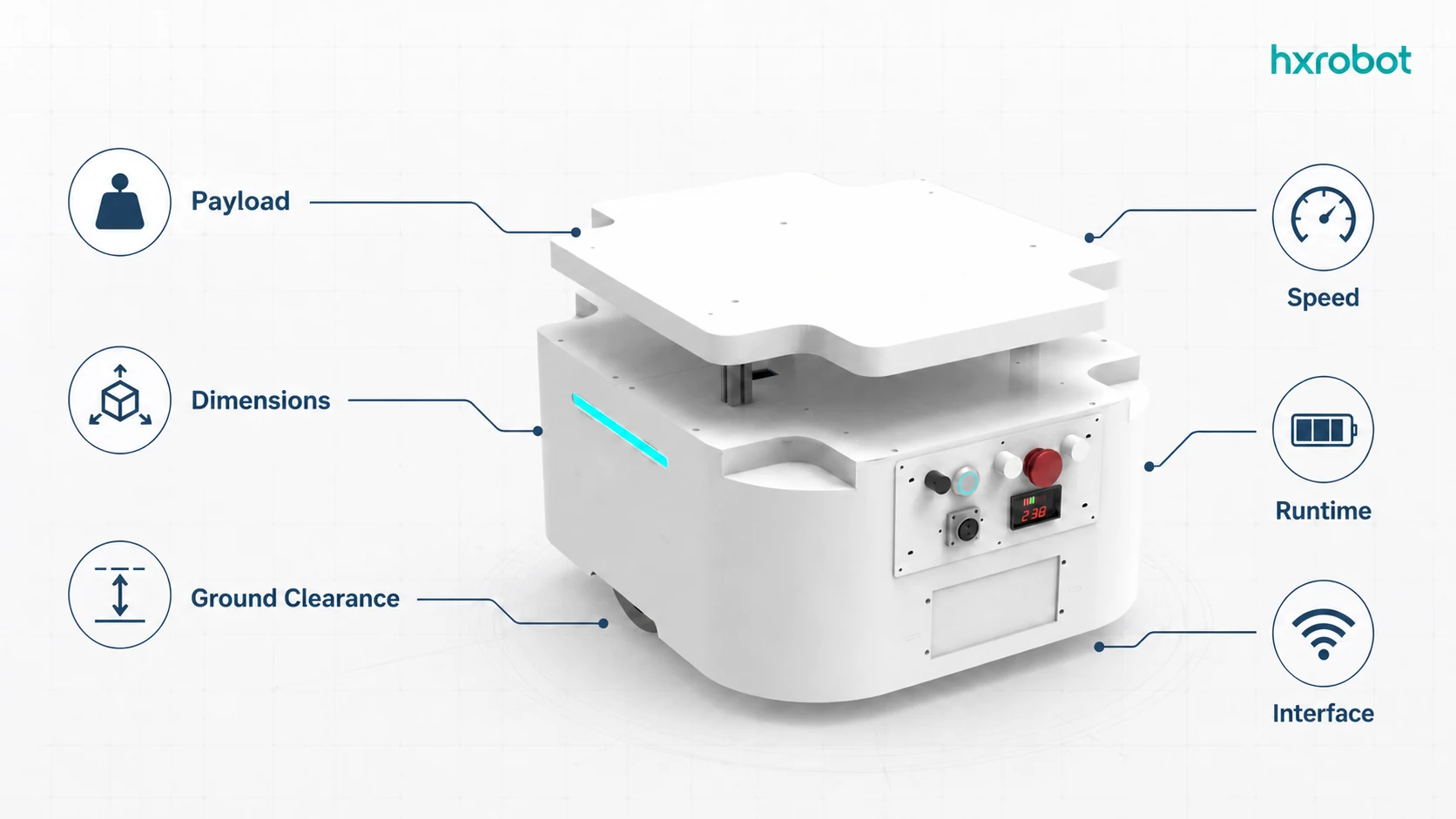
Mobile Robot Chassis Selection Checklist
Before requesting a quotation, prepare the following information:
| Requirement | Information to Provide |
|---|---|
| Application | Transportation, inspection, research, agriculture or another task |
| Environment | Indoor, outdoor or both |
| Payload | Total equipment and material weight |
| Dimensions | Required platform length, width and height |
| Terrain | Flat floor, gravel, grass, mud, slopes or obstacles |
| Drive type | Differential, Ackermann, Mecanum or tracked |
| Navigation | LiDAR SLAM, RTK/INS, vision, magnetic strip or other |
| Speed | Normal and maximum operating speed |
| Runtime | Required continuous working time |
| Interfaces | CAN, RS232, RS485, Ethernet, USB or other |
| Software | ROS, ROS 2, SDK or custom protocol |
| Quantity | Prototype quantity and expected production volume |
| Customization | Mechanical, electrical or software requirements |
Conclusion
The best mobile robot chassis is not necessarily the platform with the highest payload or maximum speed. It is the chassis that matches the robot’s application, environment, navigation method, integration requirements and operating schedule.
A suitable platform should provide reliable mobility, sufficient payload capacity, accessible communication protocols and enough flexibility for sensors and upper-level equipment.
HXROBOT provides standard and customized mobile robot platforms for logistics, inspection, education, research and outdoor applications. Our platforms can support different drive systems, navigation solutions, communication interfaces and equipment configurations.
To receive a chassis recommendation, send us the following information:
- Application
- Required payload
- Platform dimensions
- Indoor or outdoor environment
- Ground conditions
- Navigation method
- Required runtime
- Estimated quantity
Our engineering team will review your requirements and recommend a suitable standard platform or customized robot solution.